


Henry Rees
- @HRees
- | Him/His
WILDLABS
Fauna & Flora





With the judging process for the 2026 WILDLABS Awards now underway, we are excited to share a look at the statistics behind this year’s applications.
We saw a remarkable response from the global conservation technology community, with a total of 523 applications submitted over the application period, more than double last year’s total of 251. We are incredibly grateful to every project team that took the time to apply. We know the significant effort required to develop a strong proposal, and we deeply appreciate the continued time, energy, and commitment that applicants bring to the WILDLABS Awards process.
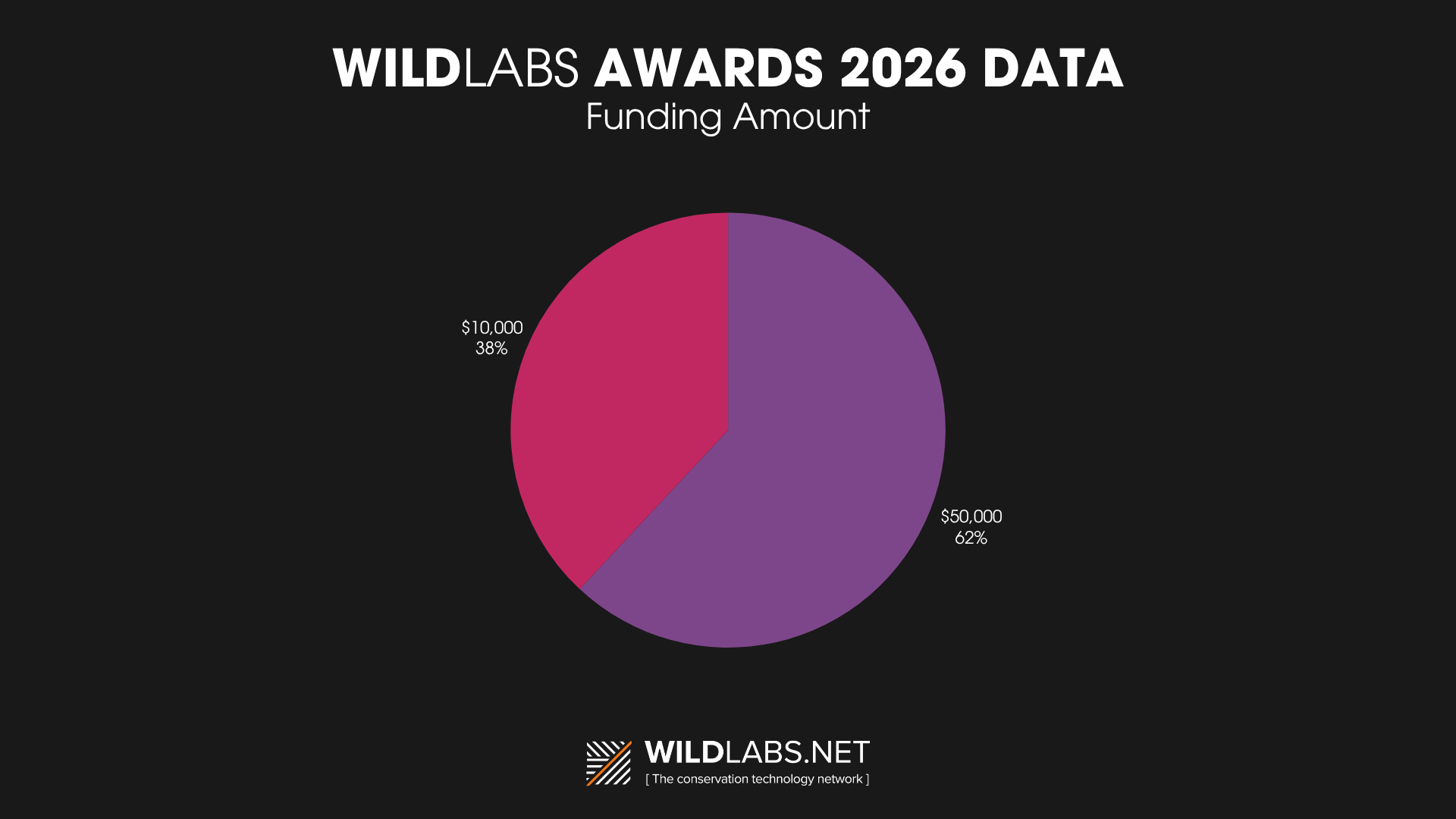
Of the total applications received, 324 projects applied for the $50,000 grant category, while 199 projects applied for the $10,000 grants. The continued strong demand for larger grants reinforces the importance of providing funding opportunities for ambitious conservation technology projects with the potential for significant impact and scale. At the same time, we saw a higher proportion of applications to the $10,000 category than in previous years, highlighting the ongoing importance of grassroots initiatives and smaller-scale projects within the conservation technology community. With such high levels of interest, the $50,000 category in particular remains extremely competitive this year.
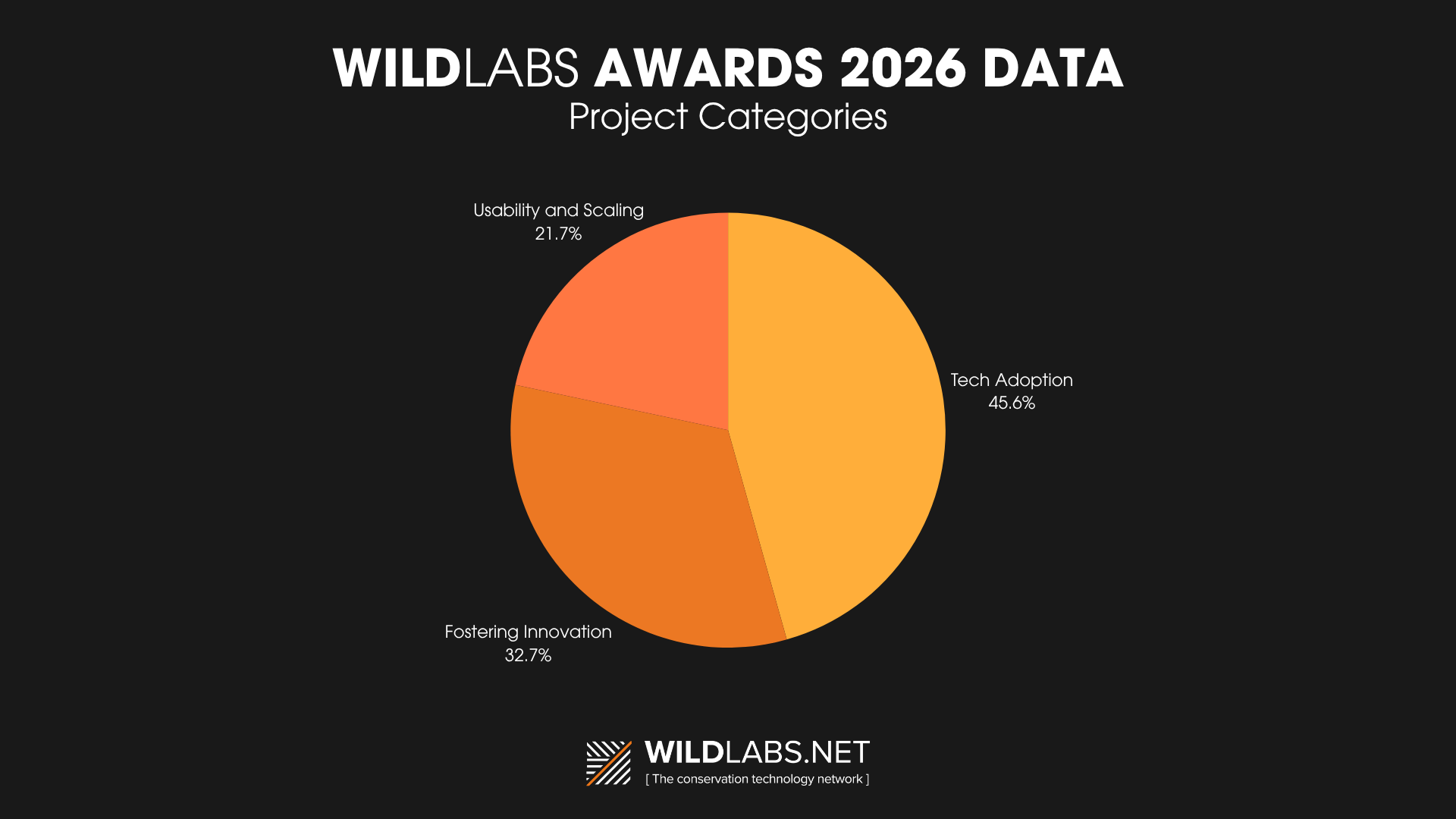
As in previous years, we saw a balanced distribution across our award categories, with technology adoption and application remaining the most represented category (236). This was followed by fostering innovation (169) and usability and scaling (112), demonstrating continued interest across the full conservation technology pipeline, from early innovation through to implementation and scale.
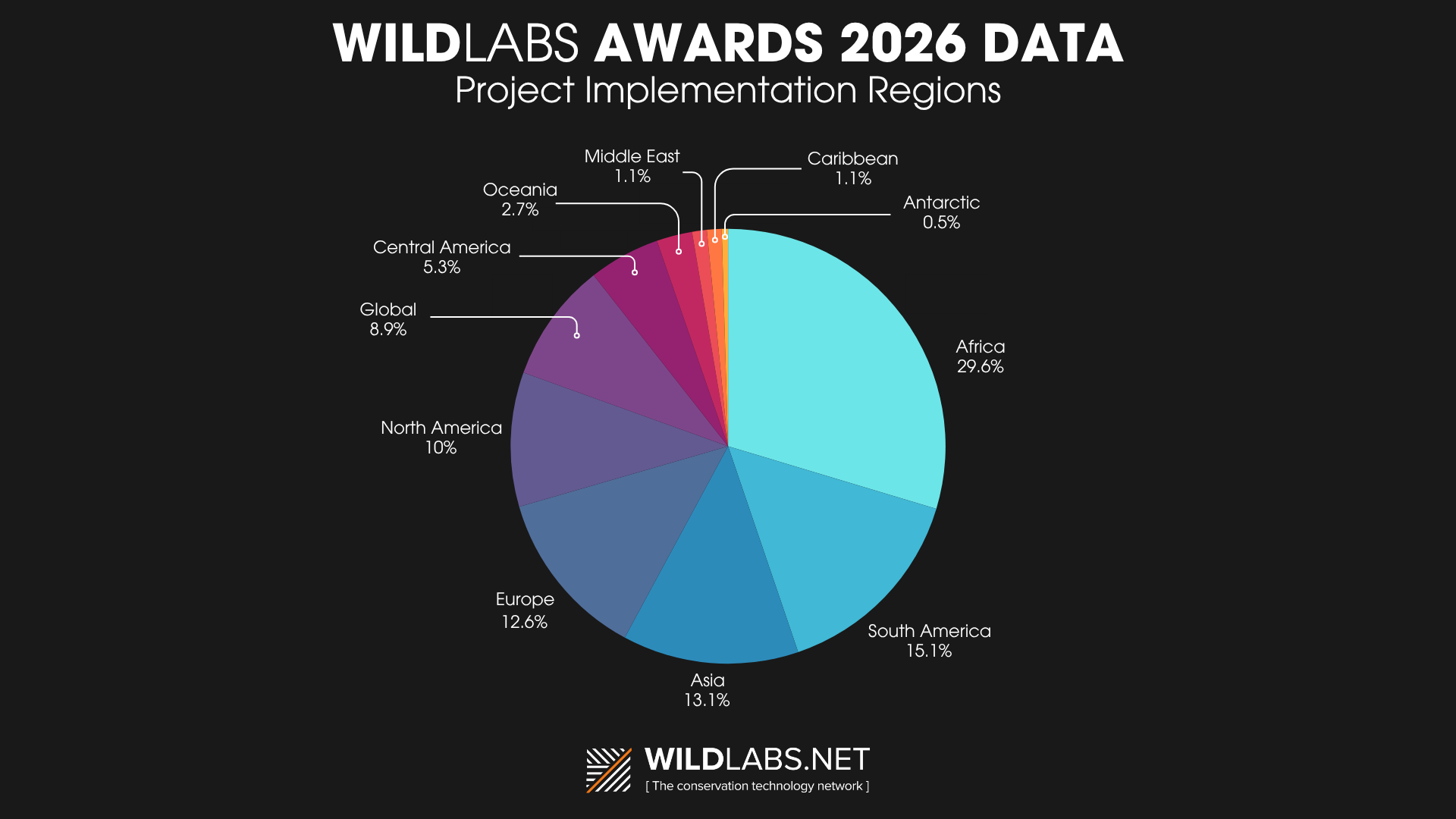
We also collected data on the regions where project work will take place. We were delighted to see Africa emerge as the most represented region this year, accounting for 190 applications, followed by South America (97) and Asia (84). This continued growth in applications from across the Global South reflects the increasing reach of the WILDLABS Awards and aligns strongly with our long-term goal of supporting conservation technology projects led by, or working closely with, communities and organisations in biodiversity-rich regions around the world.
Europe (81) and North America (64) remained strongly represented, while we also saw projects planned across Central America, Oceania, the Middle East, the Caribbean, and even Antarctica, highlighting the truly global scope of this year’s applicant pool.
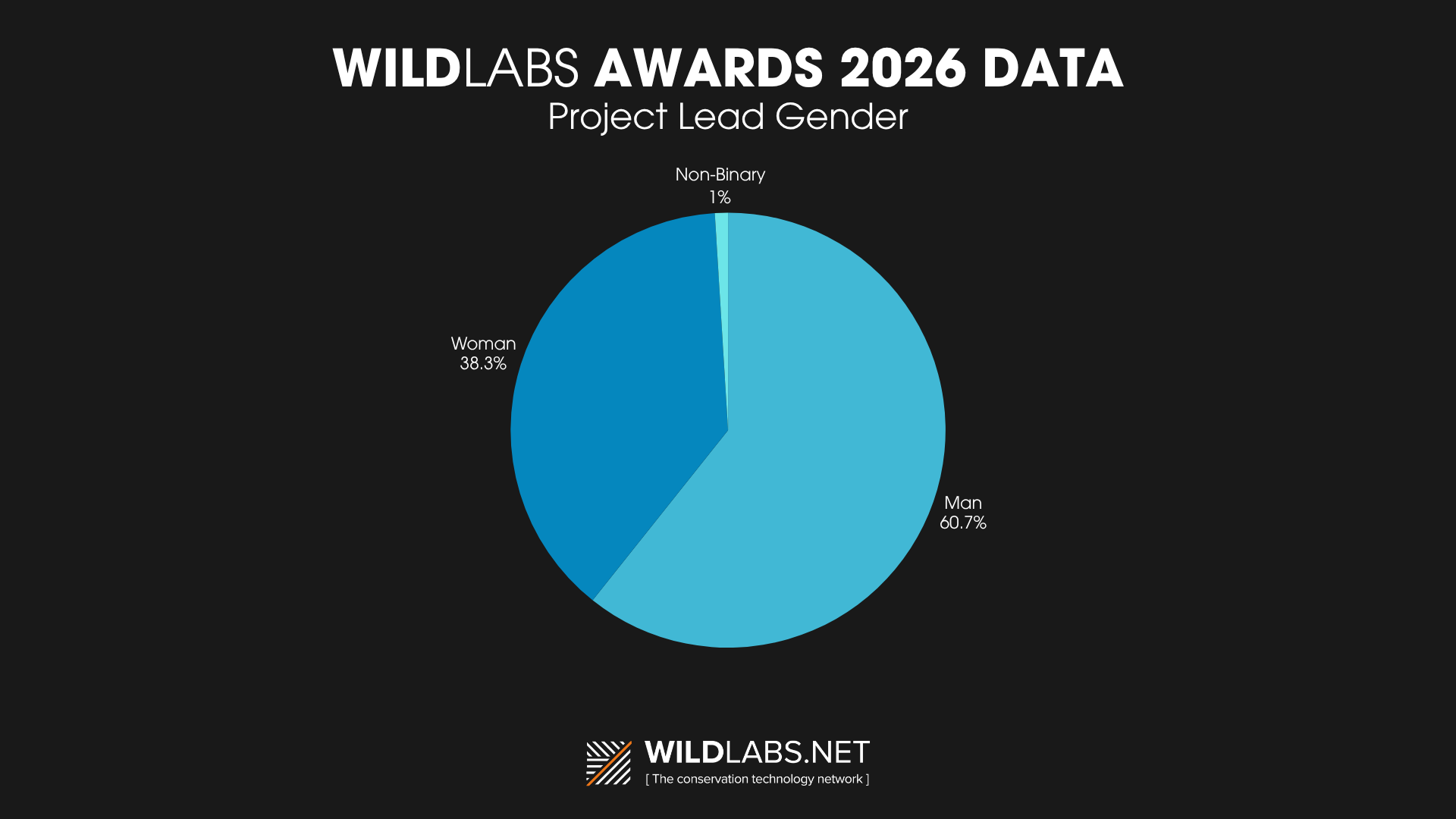
We also gathered data on the gender identity of project leads. Of the applicants who shared this information, 197 identified as women, 312 as men, and 5 as non-binary. While there is still progress to be made toward achieving greater gender balance across the conservation technology sector, we continue to see strong leadership and participation from women-led projects throughout the applicant pool. Increasing diversity and inclusion across conservation technology remains an important priority for the WILDLABS community.
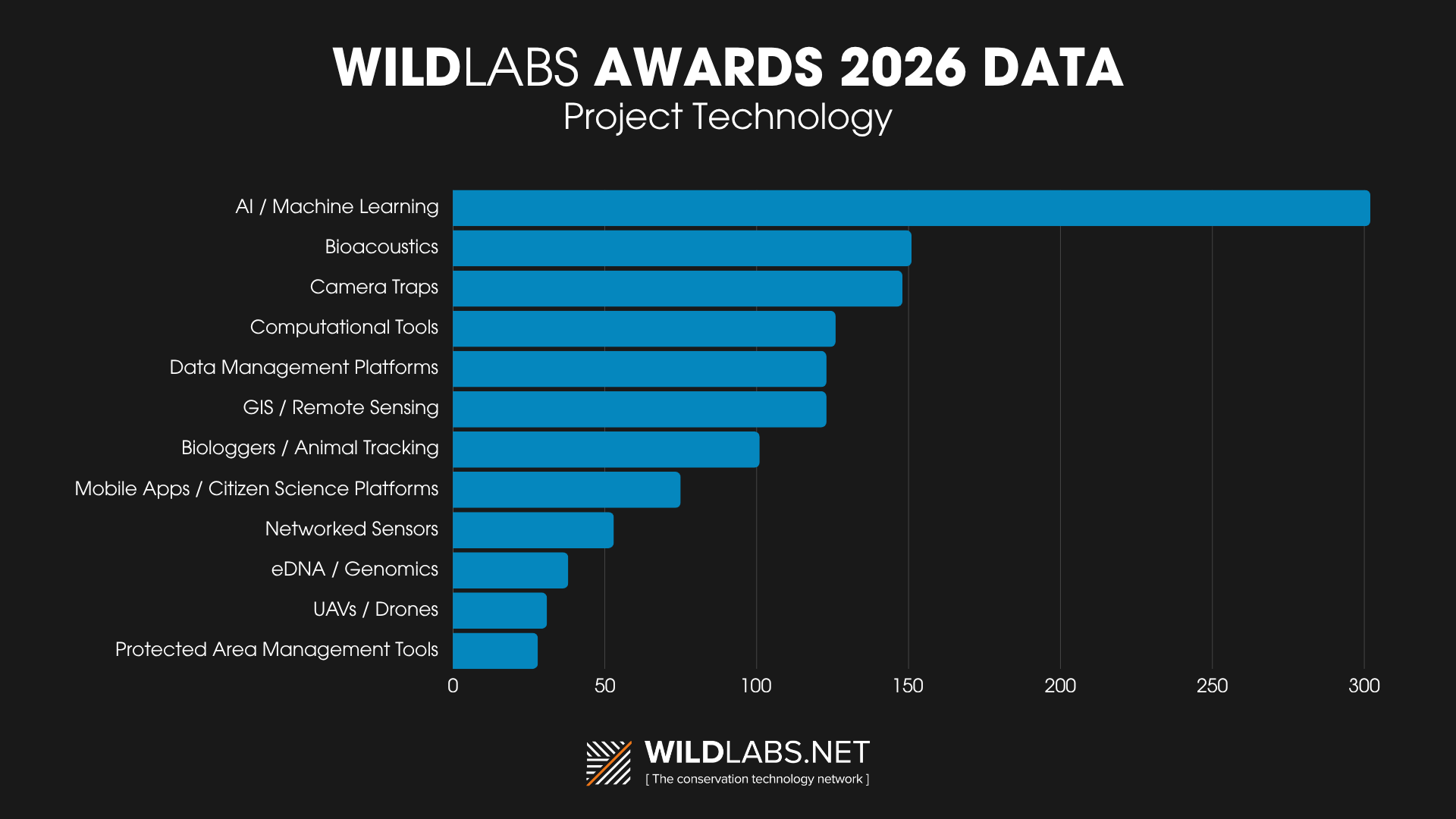
This year’s applications also provide valuable insight into the technologies and conservation challenges currently shaping the sector. Artificial intelligence and machine learning emerged as the most commonly used technologies, appearing in 302 applications. The continued prominence of technologies such as bioacoustics, camera traps, GIS and remote sensing tools, and data management platforms demonstrates how increasingly integrated these tools are becoming within conservation practice worldwide.
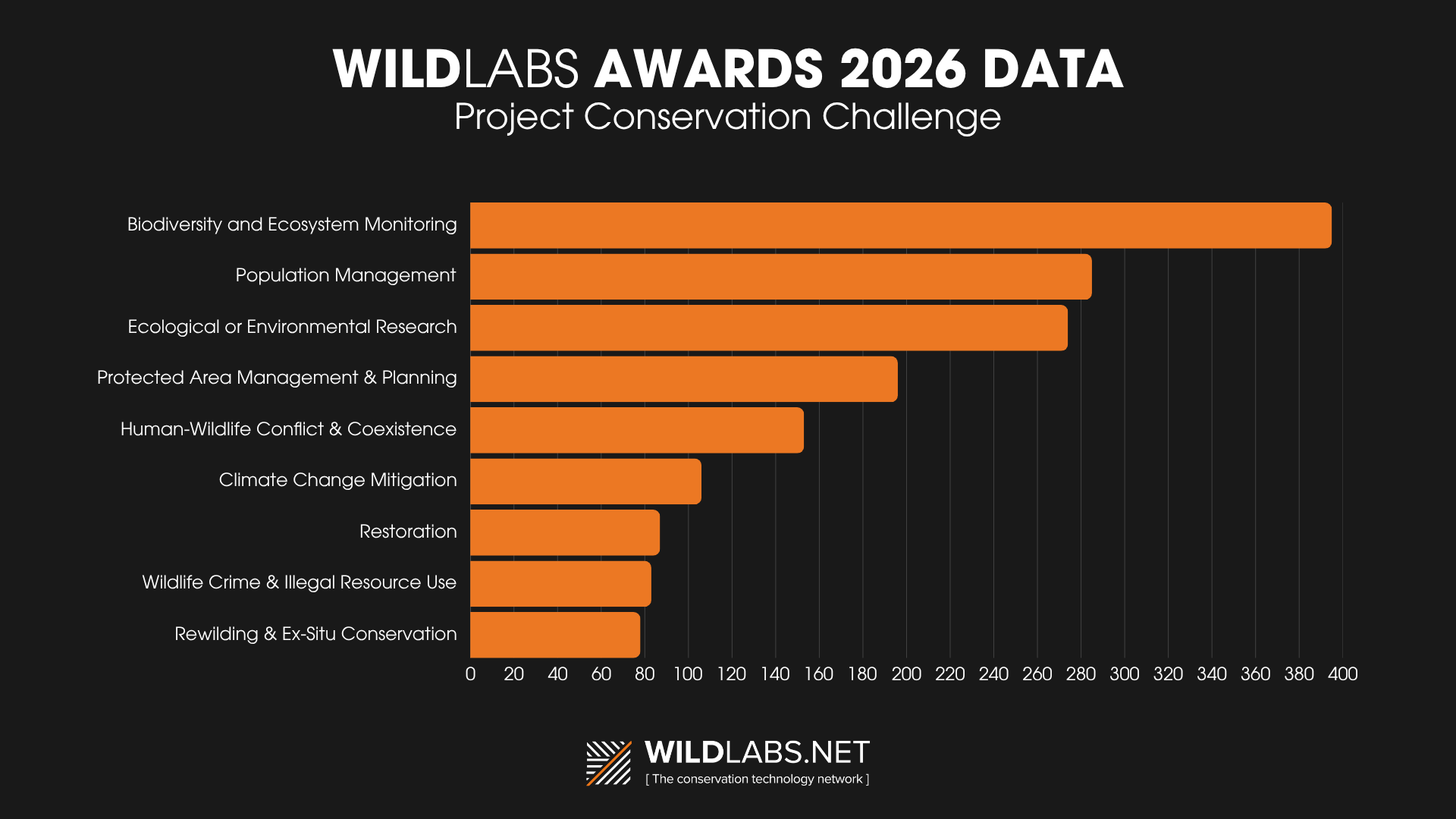
Biodiversity and ecosystem monitoring remained the most common challenge area overall (395), followed by species conservation and population management (285) and ecological or environmental research (274).
Overall, the 2026 WILDLABS Awards application pool reflects a growing and increasingly global conservation technology community that is developing and applying innovative tools to address some of the world’s most urgent biodiversity challenges. We are currently reviewing finalists and look forward to announcing this year’s awardees soon. At the same time, we are exploring opportunities to further expand the reach and impact of the program in the years ahead, building on the incredible momentum and innovation demonstrated by this year’s applicants.