

Brett Smith
- @diyaquanauts
- | he / him


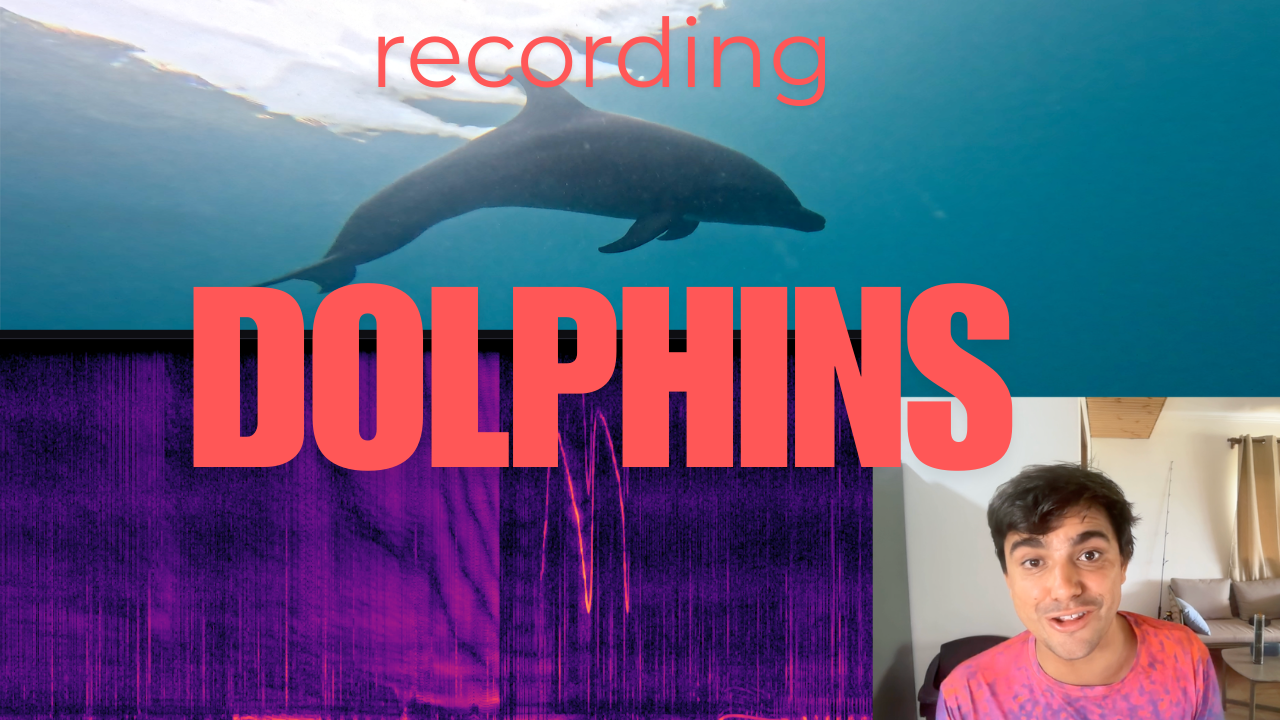
A few years back, we began work in earnest on our DFAD recycling project in Seychelles.
During the exploratory phase - we experimented with every high value use for the buoys we could think of - which included a hydrophone.
The project proved to be much more difficult than we originally anticipated, and quickly was sidelined for simpler use cases, however now we have just got our first usable result that validates our hardware and software signal chain.
We have more than a few concepts in mind for this recorder. While the firmware needs development, the analog front end now includes an ultra low power ADC that is capable of dynamically thresholding the noise floor. When events cross this threshold, the system can be turned on to record high fidelity audio.
The plan is to make these deployable as long-running recorders, or deployable buoys. If cellular is available - audio streaming may be possible, otherwise if satellite is needed, spectrograms can be computed and sent as a low bandwidth data bundle.
We still have a ways to go, but Id definitely welcome any insight or feedback here!!!
2 May 2026 7:04pm
Greetings Brett, it is interesting to see to the project you are working on. If there's anything I can do to help with my skillset let me know.
Thanks, Mike


3 May 2026 7:46am
Brett, you may reach out to @Lucille, who under the auspices of the Partnership for Observation of the Global Ocean (POGO), the Scientific Committee of Ocean Research (SCOR), and the International Quiet Ocean Experiment (IQOE) is managing the development of LC-MARE a low cost marine acoustic recorder. An ultra low power ADC is indeed an important component, so there may be some synergies.

6 May 2026 3:35pm
This is really interesting — especially the part about experimenting with different high-value uses.
I’m currently working on a small edge AI project for ecosystem monitoring, and it’s made me realize how different things can look outside of controlled environments.
Out of curiosity, during those experiments, what ended up being the biggest constraint — was it more about technical feasibility, cost, or something unexpected in real-world conditions?

Chris Nicholas
Society for Conservation GIS



11 May 2026 7:34pm
cool!
When you say: "...first usable result that validates our hardware and software signal chain." can you share what those chains are?
As for connectivity, yeah, that's a HUGE challenge ... Can you do SMS-level connectivity to Starlinks?
I presume you'd want to log basic temp/salinity, and perhaps include a basic accelerometer for wave motion over something like MQTT.
As for pushing down bioacoustic processing to the devices, yeah, would be awesome to do some minimal envelope threshold detection, and just send back compressed versions of 'the good stuff' . Maybe even listen for propellers and/or fishing sonar too, and send EarthRanger alerts.
And of course you'd want to do OTA updates, which in turn introduces security, etc.
Fun project!
Mike Palko