
Group curators

Jenna Kline, PhD
- @jennamkline
- | She/Her
Imageomics Institute
ABC Global Climate Center

Youssef Bayouli
This group aims to unite practitioners, researchers, and technologists working at the intersection of edge AI and conservation. With a growing need for real-time, on-device data processing in the field, edge computing is becoming a vital tool for monitoring ecosystems, detecting threats, and making decisions where internet connectivity is limited or nonexistent.
Our focus is on practical, field-tested applications of edge AI such as smart camera traps, acoustic monitoring devices, sensor networks, and lightweight machine learning models deployed on low-power hardware. By bringing together diverse perspectives from wildlife biologists deploying systems in remote areas to engineers building optimized edge pipelines, we hope to accelerate innovation, troubleshoot common obstacles, and improve system resilience in harsh environments.
The group will serve as a collaborative hub to share open source tools, machine learning models, deployment workflows, power management strategies, and case studies. Members will also explore key topics like data sovereignty, ethical AI deployment in conservation, energy efficient design, and the role of edge systems in community-based monitoring.
Through community calls, tutorials, expert talks, collaborative challenges, and potential hackathons or summer schools, we aim to foster a connected ecosystem of edge innovators tackling real-world environmental challenges. Whether you are deploying edge systems in the rainforest, prototyping solar powered machine learning hardware, or just curious about where AI meets ecology, this group offers a space to connect, learn, and co-create.
Group curators
- @jennamkline
- | She/Her
Imageomics Institute & ABC Global Climate Center
Edge AI for Autonomous Ecological Monitoring


- 4 Resources
- 15 Discussions
- 8 Groups
MSc student in Advanced Engineering for Robotics & AI. AI projects on camera traps and edge bioacoustics for bird mapping. Nat Geo & Nature Conservancy marine conservation externship alumnus.




- 1 Resources
- 33 Discussions
- 4 Groups
No showcases have been added to this group yet.
I love to share my passion for Electronics, Machine Learning and Data Analysis through personal projects

- 3 Resources
- 22 Discussions
- 3 Groups

- @keenanjohnson
- | he/him
Technologist working on machine learning for kelp and citizen science GHG monitoring
- 0 Resources
- 7 Discussions
- 7 Groups

Software engineer exploring conservation technology, ecology, and systems thinking. Interested in biodiversity monitoring, geospatial tools, bioacoustics, habitat restoration, and decision-support software for conservationists and land manager
- 0 Resources
- 1 Discussions
- 11 Groups

Founder of Ecotone Robotics, building drone payloads, field hardware, and ML systems for conservation. Aerial survey, edge inference, and computer-vision species ID.
- 0 Resources
- 0 Discussions
- 4 Groups

WILDLABS & Wildlife Conservation Society (WCS)
I'm the Bioacoustics Research Analyst at WILDLABS. I'm a marine biologist with particular interest in the acoustics behavior of cetaceans. I'm also a backend web developer, hoping to use technology to improve wildlife conservation efforts.





- 46 Resources
- 41 Discussions
- 34 Groups

Quantitative Ecologist

- 0 Resources
- 1 Discussions
- 3 Groups

I'm a software developer that has pivotted to starting a company, Wildlife Security Innovations, to help people and wildlife live together safely.


- 0 Resources
- 500 Discussions
- 8 Groups
MSc student in Advanced Engineering for Robotics & AI. AI projects on camera traps and edge bioacoustics for bird mapping. Nat Geo & Nature Conservancy marine conservation externship alumnus.
- 1 Resources
- 33 Discussions
- 4 Groups
Michael operates a small business which contributes to multi-disciplinary research and development projects, and field operations such as island restoration / invasive species eradication programs.
- 0 Resources
- 12 Discussions
- 4 Groups
- @jennamkline
- | She/Her
Imageomics Institute & ABC Global Climate Center
Edge AI for Autonomous Ecological Monitoring
- 4 Resources
- 15 Discussions
- 8 Groups

- @TaliaSpeaker
- | She/her
WILDLABS & World Wide Fund for Nature/ World Wildlife Fund (WWF)
I'm the Executive Manager of WILDLABS at WWF

- 27 Resources
- 64 Discussions
- 32 Groups
- 0 Resources
- 0 Discussions
- 4 Groups
Careers
Ecologist (Postdoctoral Research Fellow), IS-0408-09

Lacey Hughey
The Smithsonian’s National Zoo & Conservation Biology Institute (in collaboration with Duke Farms, a center of the Doris Duke Foundation) is seeking a postdoctoral researcher to lead the development of next-gen...
1 June 2026
Article

🌍 Conservation technology is transforming how we protect wildlife, but are we thinking carefully enough about the risks? Drones, camera traps, GPS trackers, acoustic sensors, AI, and remote sensing have become...
22 May 2026
Link
Solar Powered Mini AI wildlife Monitor!

Luke Ditria
Hi all, I'm sharing the latest update to my edge-compute wildlife monitor, this time Solar powered for full off-grid operation! The Code and 3d printable STLs files for this project are all available!
21 May 2026
Careers
A 3-year, fully-funded PhD studentship at the interface of ecological theory, AI and global biodiversity mapping
28 April 2026
Careers
Ecological Data Scientist
Lacey Hughey
The Smithsonian Institution is the world’s largest museum, education, and research complex, with 21 museums and the National Zoo. This position is located in the Smithsonian's National Zoo and Conservation Biology...
21 April 2026
Careers
SDZWA Summer Fellowship 2026

Kyra Swanson
12-week paid tech internship at the San Diego Zoo Safari Park
25 December 2025
Article

The University of Hawai‘i - Ocean & Resources Engineering program is seeking project ideas from community groups, marine/ocean scientists, government agencies, companies, and non-governmental organizations for their...
16 November 2025
Article
Highlights from the WILDLABS Edge Computing Group Kickoff Meeting
Jenna Kline, PhD
Connecting people, projects, and possibilities at the edge.
4 November 2025
Link
Solar Powering a Raspberry Pi!
Luke Ditria
I've been building a lot of experimental devices for edge computing. After not being able to to find a great solution for powering a Raspberry Pi, or other SBC, from a solar battery set-up that could also interface and...
23 October 2025
Funding
Edge AI Earth Guardians Contest on Hackster.io

Jinger Zeng
Hackster invites Wildlab community to submit your project to the global competition for a chance to win cash prizes and go-to-market opportunities.
22 September 2025
Article
Edge AI on Zephyr: ULP Acoustic Monitoring for Wildlife
misoji engineer
This project is built on Zephyr RTOS and runs a Ultra-Low-Power(ULP) acoustic monitoring system created with Edge Impulse.
22 September 2025
Article
Predict Air Pollution with Computer Vision

Lucas Fernando
I built a low-cost AI system that predicts air quality from a single photo.
17 September 2025
March 2026
event
Diana Mastracci
| Description | Activity | Replies | Groups | Updated |
|---|---|---|---|---|
| nothing like a concrete, interesting problem to find focus:-]my partner is into chickens ... trust me, it's a whole subculture 🤣We were talking with friends about pecking... |
|
Edge Computing | 1 hour 6 minutes ago | |
| Hey Luke,Appreciate your reply, very much.I am not quite sure what you mean by setup but, this is the experimental design.I will deploy cameras in shade forest areas to record... |
+19
|
AI for Conservation, Autonomous Camera Traps for Insects, Camera Traps, Edge Computing | 5 hours 30 minutes ago | |
| Thank you for these links; I will have a read of them :) |
|
Edge Computing | 2 months 1 week ago | |
| Greetings, I'm based in Gibsonia, PA and looking to help anyway I can part time either local or remote.My skillsets are the following:.NET... |
|
Acoustics, AI for Conservation, Animal Movement, Autonomous Camera Traps for Insects, Build Your Own Data Logger Community, Camera Traps, Citizen Science, Climate Change, Community Base, Connectivity, Conservation Dogs, Conservation Tech Training and Education, Data Management & Mobilisation, Drones, Earth Observation 101 Community, East Africa Community, Edge Computing, eDNA & Genomics, Emerging Tech, Ethics of Conservation Tech, Funding and Finance, Geospatial, Human-Wildlife Coexistence, Latin America Community, Marine Conservation, Protected Area Management Tools, Sensors, Sustainable Fishing Challenges | 2 months 2 weeks ago | |
| hi @elsa thanks so much for the suggestion! i would love the SCD Drones and Data Working Group's input on this proposal. I was planning on attending one of their meetings later in... |
|
Drones, AI for Conservation, Data Management & Mobilisation, Edge Computing, Open Source Solutions, Sensors | 2 months 3 weeks ago | |
| Conservation monitoring seeks decision-relevant signals at scale. Ecological research often pursues specific, project-driven questions.... |
|
East Africa Community, AI for Conservation, Camera Traps, Drones, Edge Computing, Emerging Tech, Human-Wildlife Coexistence, Latin America Community, Marine Conservation, Protected Area Management Tools, Sensors | 3 months 3 weeks ago | |
| AMAZING |
|
Edge Computing | 5 months 1 week ago | |
| Awesome. Lets keep in touch |
|
East Africa Community, Acoustics, AI for Conservation, Camera Traps, Community Base, Edge Computing | 7 months 2 weeks ago | |
| Hello Samuel,First of all, all the best of success with the Edge AI Earth Guardians contest.Based on my experience with using PAM for poaching/hunting pressure monitoring, a photo... |
|
Acoustics, AI for Conservation, Camera Traps, Conservation Tech Training and Education, Edge Computing | 8 months ago | |
| Hey Nikhil,Thanks a lot for your message! The group is no longer just a proposal , it’s now officially created 🎉 You can join us here: I’d be super keen to hear more... |
+55
|
AI for Conservation, Community Base, Edge Computing | 8 months 2 weeks ago | |
| Hi everyone :)I’ll be in Kinshasa, DRC from 22 to 27 September as part of the AFRISTART program (Qawafel/RedStart Tunisie), which supports... |
|
AI for Conservation, Community Base, East Africa Community, Edge Computing | 9 months ago | |
| We sell a product that includes the model, but we don't have a freely downloadable model for that purpose. You could try pytorch wildlife or speciesnet for a version to compare... |
|
AI for Conservation, Camera Traps, Edge Computing | 9 months 1 week ago |














remote sites as 'Edge computing'
22 March 2026 4:54pm
22 April 2026 2:07am
Yes, I was considering inference only in this case. I see it as a filter applied to raw images and audio before uploading to cloud/server to save bandwidth (if it is necessary at all?), which I think was the OP's request.
It is then a balance of power requirements and power stability (and physical security?) to keep a small server running and connected. But a starlink system is relatively power hungry for a remote station too, so they may have this covered.
Software wise, the "TRAPPER" system might do what you need, with a local/LAN installation and allow for admin access externally. https://os-conservation.org/trapper/
8 June 2026 12:58am
nothing like a concrete, interesting problem to find focus
:-]
my partner is into chickens ... trust me, it's a whole subculture
🤣
We were talking with friends about pecking orders , and thought... hmmmm
so, after riffing with Claude a bit, assembling RPi4+ USB Coral acclerator + Tapo 120 to tinker with RTSP streams Frigate Plus , COCO, Pytorch, etc. to automatically determine a pecking order, from an RTSP webcam.
Claude's got the strategy all figured out! 🤣
And we've got an Audiomoth and a StealthCam we use on occasion.
SO, managing/evolving that RPi4-based from behind the firewall at her house, versus mine, will be fun.
Just installed the Wireguard client; off we go...
(Viv, top of the pecking order, sole survivor of a previous weasel attack; all the others are newcomers...)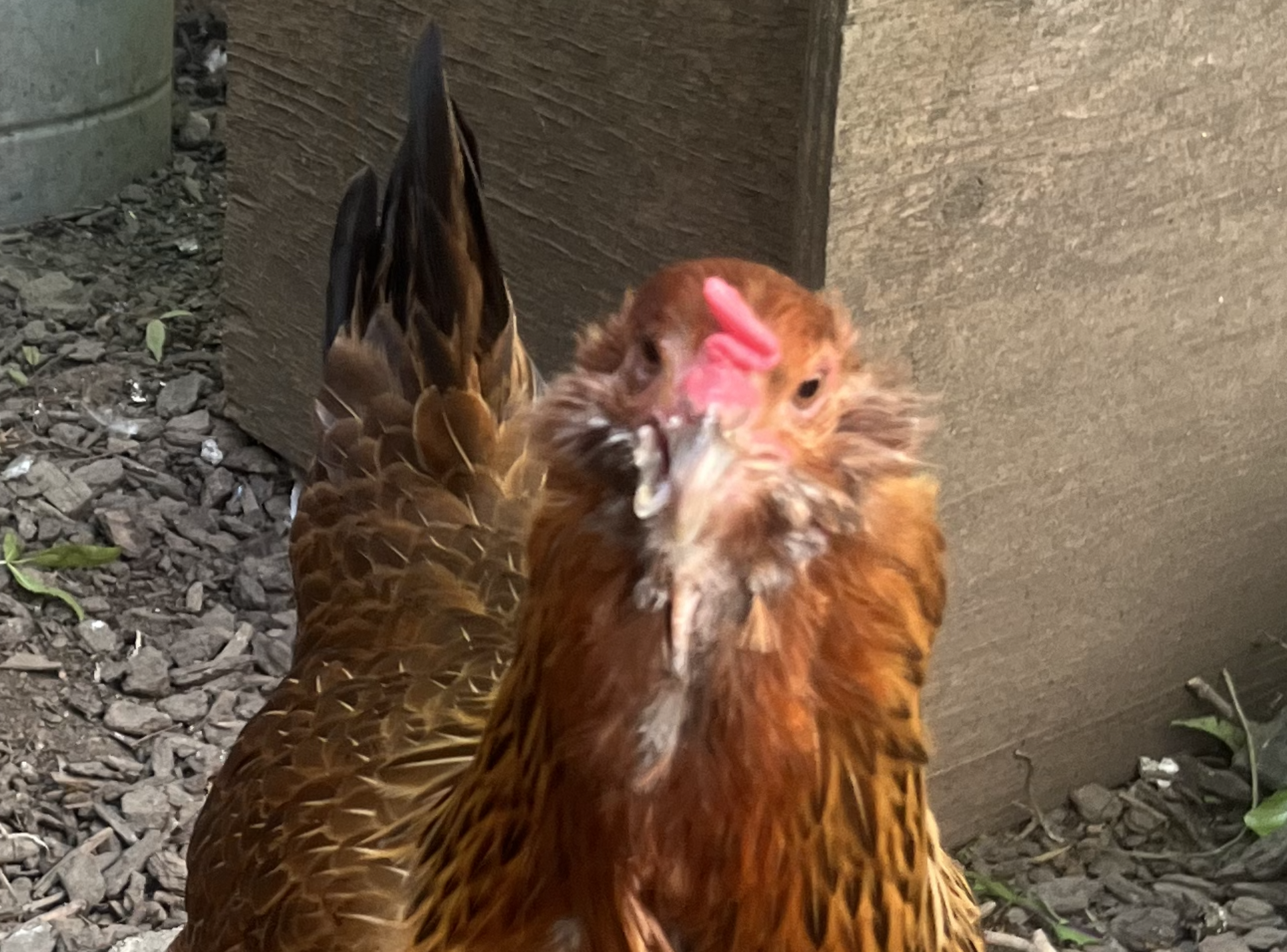
Mini AI Wildlife Monitor
25 June 2025 12:27pm
7 June 2026 1:56pm
Hi,
I'll try to answer the best I can.
1.
A Pi Pico would not have the power to record and store very high resolution images
To drive the LEDs you'll need to use an LED driver module or a simple MOSFET, alternatively there are IR LED modules with a daylight sensors on them to automatically switch the LEDs on at night.
The resolution required will depend on the distance from the camera to the target and the focal length of your lens (aka how zoomed in you are).
2.
How is the Pi Zero being woken up? a PIR sensor would not likely work for insects. also the Pi Zero takes about 10seconds to wake up from shutdown.
When does it cut power? if the battery runs out there is not much you can do?
3.
All depends on exactly what your setup is, though I would recommend fixed focus for insects.
Again without knowing your exact setup I can't really recommend a specific camera, all I can say is "get the best you can afford".
7 June 2026 1:56pm
I haven't really looked into PoE cameras, sorry.

7 June 2026 6:33pm
Hey Luke,
Appreciate your reply, very much.
I am not quite sure what you mean by setup but, this is the experimental design.
I will deploy cameras in shade forest areas to record insect visitors to animal feces. The “baits” will be deployed in a flat square with a camera pointing down on it at a distance of 30 to 40 cm.
So, following your comments if PIR doesnt work what should I use? Motioneyes? Or something else?
My comments regarding the battery are related to the PI shutting down when the battery level is low and some hats just stop supplying power automatically instead of being in standby/hold. So I wonder if I could do something coding/physically to solve it. Can I?
Following your advice about the fixed lens, I would need to adjust the focus for each camera in the field to ensure everything is in focus, is that right? It's a little different than a month trap since the surface where the insects will move around is not exactly even, hence my thoughts on using a autofocus camera.
Once again thanks for the help, and congrats on your elegant project.

Ecologist (Postdoctoral Research Fellow), IS-0408-09
1 June 2026 4:02pm
Help shape best-practice guidance on conservation technology - input to survey
22 May 2026 10:20am

Solar Powered Mini AI wildlife Monitor!
21 May 2026 2:07am
Open PhD project: Decoding and mapping Earth's species interactions with ecological AI
28 April 2026 4:51pm
Ecological Data Scientist
21 April 2026 9:22pm
Help us find our cover image!
18 February 2026 4:19pm
20 March 2026 12:02am
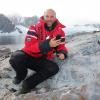
How about this one. Three wolves captured on a solar powered thermal imaging triggered wolf detector. One wolf about to jump the ditch to take a closer look at the horses in the field.
This marks the end of an era. The alpha she-wolf of this pack was unfortunately killed on a highway today. She raised many pups. We grieve for you Noella.
The video for this shot is here
23 March 2026 9:55pm
Hi Philip,
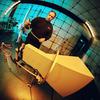
Here's an overview and a blog on Voltaic's website. We manually recover the microSD cards, but it would also be possible to use Iridium SBD by including a Rockblock connected to the RPi for full recovery of images (although we don't need to, as the ideal situation is to remove the cameras and leave nothing behind many years later).

Three years in Antarctica - affordable and durable time-lapse monitoring - Arribada | Open Source Technology for Wildlife, People & Planet
This solar time-lapse camera was developed to monitor penguin rookeries for Penguin Watch

26 March 2026 10:55am
Thank you for these links; I will have a read of them :)
Looking To Utilize My Skillsets To Help
19 March 2026 10:26pm
Seeking input: FAIR & AI-ready wildlife drone datasets
4 March 2026 9:21am
7 March 2026 10:27am
Thanks Sean! Looking forward to the community's feedback on this! Feel free to fill out the survey, or open an issue on GitHub to track specific suggestions.
12 March 2026 11:11am
Hi @jennamkline , are you in the SCB Drones and Data Working Group? I think it would be great to have that as a topic for discussion during the next meeting! I'd be keen to hear more about this work.
@annavallery this might be of interest to you.
13 March 2026 2:36pm
hi @elsa thanks so much for the suggestion! i would love the SCD Drones and Data Working Group's input on this proposal. I was planning on attending one of their meetings later in March to solicit feedback. If there are additional venues to engage with the group, please let me know!
What Do Other Fields Most Often Underestimate About Your Work?
13 February 2026 12:45pm
Edge AI for Conservation Workshop
23 February 2026 8:38am
Hi All, thanks so much to everyone who participated in the workshop and made it a success! We've uploaded the slides here:

Thanks!
Jenna
23 February 2026 8:38am
Hi All, thanks so much to everyone who participated in the workshop and made it a success! We've uploaded the slides here:
Thanks!
Jenna
SDZWA Summer Fellowship 2026
25 December 2025 6:12pm
Advancing Conservation with Edge AI: Key Takeaways from Our Recent Session
16 December 2025 11:22am

25 December 2025 8:54am
AMAZING
AI for conservation on the edge with Project SPARROW
20 November 2025 9:44am
🚨 🔔 Call for Project Ideas: Partner with Graduate Ocean Instrumentation and Technology Course!
16 November 2025 7:22am
Highlights from the WILDLABS Edge Computing Group Kickoff Meeting
4 November 2025 8:38pm

10 November 2025 7:20pm
Hello! A friend pointed me to this new group. Exciting! If folks are interested in the NSF AI-Edge Computing project Sage, we are having a (virtual) workshop on Wednesday the 12th.
WILDLABS Edge Computing Group Meetup
23 October 2025 8:53pm

25 October 2025 10:13pm
Hi @jennamkline and others,
There's some confusion on the time for this event. It's listed as November 4 at 11:00 am ~ 12:00 pm EDT (UTC -4), but daylight savings ends in the US on November 2. November 4 is during standard time. Easter Standard Time is UTC -5.
Is this meant to be 11am to noon EST?
25 October 2025 10:21pm
I see the event image says 11 AM EST. I'm on the West Coast, and the Zoom page said 8 AM Pacific Time (no mention of standard vs daylight savings). After I registered, the calendar invite is showing up as 7 AM.
I believe the call will be at 8 AM PST, so that's how I have it on my calendar, but I suggest people double check!
27 October 2025 3:42pm
Hi Ed, thanks so much for the heads up on this! The event is scheduled at 11 AM EST (UTC-5)/8 AM PST
Solar Powering a Raspberry Pi!
23 October 2025 8:15am
Connecting with Conservation Tech Leaders in Kenya
9 October 2025 7:57am
13 October 2025 8:53am
Hi Youssef
Greetings from Arusha, Tanzania. We are happy to see that you are interested in connecting. I am a co-leader for the East Africa Group. I would like to connect and invite you for a tech-talk with our fellows, East Africans. If you have got some space, let me know.
16 October 2025 11:29am
Hi Susan ,
Thank you for your reply and your kind invite . Unfortunately my stay in Nairobi was short but there is a chance to come back to visit east Africa again in the beginning of November and potentially going to Tanzania . Let's keep in touch :)
18 October 2025 5:07pm
Awesome. Lets keep in touch
Solar edge-AI forest watcher (prototype)
29 September 2025 12:05pm

3 October 2025 12:39pm
Hello Samuel,
First of all, all the best of success with the Edge AI Earth Guardians contest.
Based on my experience with using PAM for poaching/hunting pressure monitoring, a photo would not be really useful - unless you have a very specific setting (which I can't think of right now). The strength of PAM is that you do not need to have line of sight to detect a sound event (unlike with camera traps). Now, if you were detecting vehicle sounds, and you had the camera at a road bent, then yes, in principle, a sound + image could be useful (but then again...the sound will trigger the sensor long before the car/truck appears in the field of view of the camera....).
My concern with real-time AI is how to eliminate false positive triggering (esp. with gunshots sounds). Unless this is resolved, I would be skeptical about the use of similar solutions (and we have tried something similar in the field).
Finally, another concern is the way of data transmission - here you are using WiFi. So this is to be used at a homestead - farm setting, and not really at a remote forest, which is where we most need early warning systems.
Best regards, Christos
Edge AI Earth Guardians Contest on Hackster.io
22 September 2025 4:35pm
Edge AI on Zephyr: ULP Acoustic Monitoring for Wildlife
22 September 2025 12:21pm
Exploring the Wild Edge: A Proposal for a New WILDLABS Group
9 June 2025 5:41pm

18 July 2025 2:22pm
Hello Youssef,
Yes, let's keep contact. I'm currently looking for good conferences to publish my work, if you are aware of something, please let me know.
4 September 2025 1:33pm
Hey everyone!
This looks really cool and I'm really interested :)
Remote sensing is indeed one of the major challenges in conservation, especially with the rate and diversity of incoming data. I recently attended a climate codefest where the goal was to compress this incoming data using AI to make sense of it. We ended up using unsupervised learning to cluster meaningful data and transport it on limited bandwidths.
But there is so much more to do and learn! I'm glad you guys made this group. I would love to explore more of this area and learn from your experiences.
How can I be more involved? Let me know!
Cheers, nikhil
20 September 2025 11:06pm
Hey Nikhil,
Thanks a lot for your message! The group is no longer just a proposal , it’s now officially created 🎉 You can join us here:
Edge Computing | WILDLABS
This group unites those working at the intersection of edge AI and conservation, focusing on real-time, on-device data processing for environmental monitoring to facilitate sharing tools, models, and strategies to overcome challenges in remote, low-connectivity areas.

I’d be super keen to hear more about your codefest experience , it sounds exactly the kind of knowledge-sharing that could spark great discussions. Why not share it in the group? You’re more than welcome!
Looking forward to learning from you, :)
Youssef
Predict Air Pollution with Computer Vision
17 September 2025 1:20pm
Mini AI Wildlife Monitor Build Video
13 September 2025 12:17am
Exploring Conservation Tech Partnerships in DRC
1 September 2025 1:02pm
New Paper: Drones and Computer Vision for Collective Animal Behavior Studies
29 August 2025 4:41pm
Edge AI Earth Guardians

28 August 2025 2:00pm
21 April 2026 6:30am
Oh yeah. On a Jetson that sort of thing would be viable.
Our Pi 5 is really pushing the boundaries with what we have it doing.
To put it into perspective. Our polar bear detector is round robin checking 22 cameras with a more than 20,000,000 parameter model on a middle of the range Jetson.